
What Can You Expect from Ayurvedic Medicine?
I've been asked what Ayurveda is a few times over the years, so I finally decided to get a blog post up about it. Ayurveda, "the science of life," is an Indian medical system dating back more than 5,000 years. It is the oldest continuously practiced healthcare system in the world. The main principle of Ayurveda is to prevent and treat illness by maintaining balance in the body, mind, and consciousness. This is done through proper drinking, diet, yoga, meditation, and herbal remedies.
Ayurvedic medicine examines and understands our connection with, and the influences of the energies that make up the universe. These five elements are Vayu (Air), Jala (Water), Aakash (Space or ether), Prithvi (Earth) and Teja (Fire).
According to Ayurvedic principles, these energies exist within each of us-body, mind and consciousness-and comprise each person's constitution. Each person's constitution has different ratios of the elements, making everyone unique.
What are the Doshas?
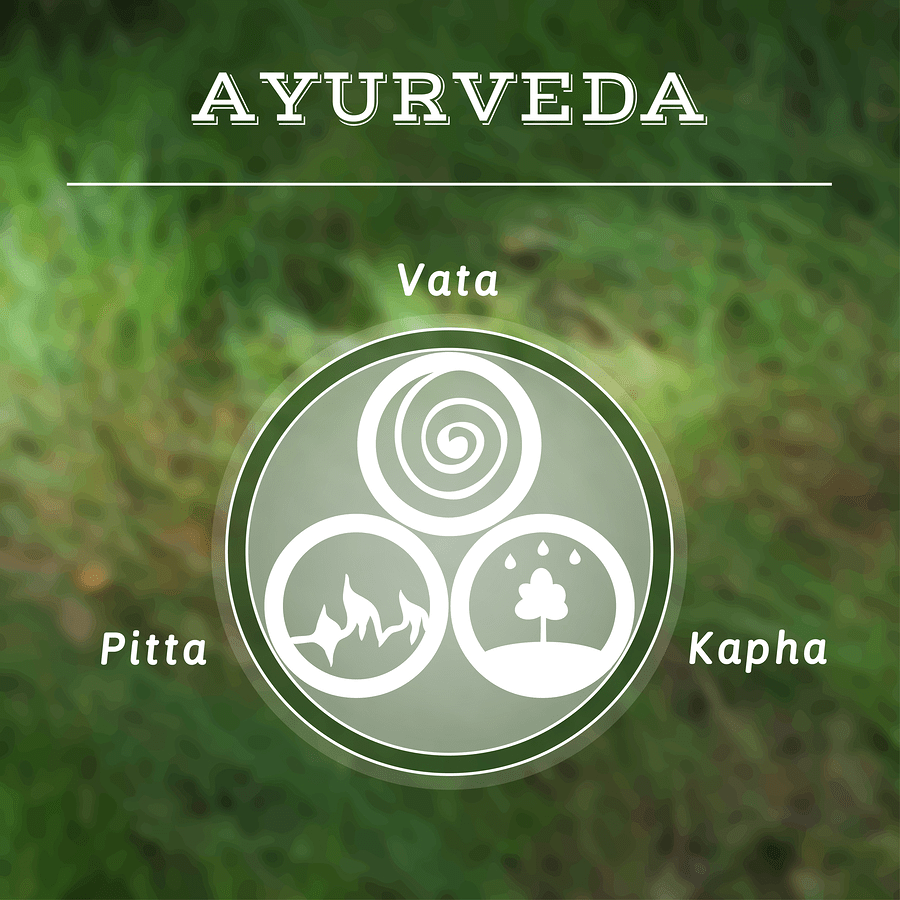
The three constitutional types, or doshas, reflect your physical, emotional, and psychological make-up. These are vata, pitta, and kapha. Usually, one or two types will dominate in a person's constitution.
Vata energy is connected with air and space and is associated with bodily movement including circulation, breathing, and heartbeat. Vata types are upbeat, highly alert, flexible and creative thinkers.
Pitta energy is linked to fire and controls digestion and metabolism. Pitta types are known for their intense personality, sharp intelligence and wit.
Kapha energy is linked to earth and water and controls growth, immunity and strength. Kapha types are often solid in build, calm and tolerant.
An Ayurvedic doctor assesses for imbalances through the understanding of the elements and doshas, and a physical examination, which includes observing the condition of the pulse, abdomen, skin, nails, eyes, and tongue.
Practitioners aim to teach people how to attain optimal health through a meaningful understanding of themselves and their dosha(s). They seek to strengthen the body, mind, and spirit through dosha specific health practices, foods, herbs, and other natural remedies. If you are looking for a more Western naturopathic perspective, Dr. Blandford offers a 15 minute Discovery Visit. There, you can find out if naturopathic methods will help you achieve your optimal health.
Resources
- Guha, Amala. “What Happens in a Visit to an Ayurvedic Practitioner?” University of Minnesota: Earl E. Bakken Center for Spirituality & Healing. http://www.takingcharge.csh.umn.edu/explore-healing-practices/ayurvedic-medicine/what-happens-visit-ayurvedic-practitioner. Accessed 06/20/2026.
- Jaiswal, Y. S., & Williams, L. L. (2016). A glimpse of Ayurveda - The forgotten history and principles of Indian traditional medicine. Journal of traditional and complementary medicine, 7(1), 50–53. https://doi.org/10.1016/j.jtcme.2016.02.002.
- Garivaltis, H. “What is Ayurveda?” Kripalu.com. Accessed on Feb 2, 2016. https://kripalu.org/resources/what-ayurveda-anyway
Leave a Comment
(0 Comments)