
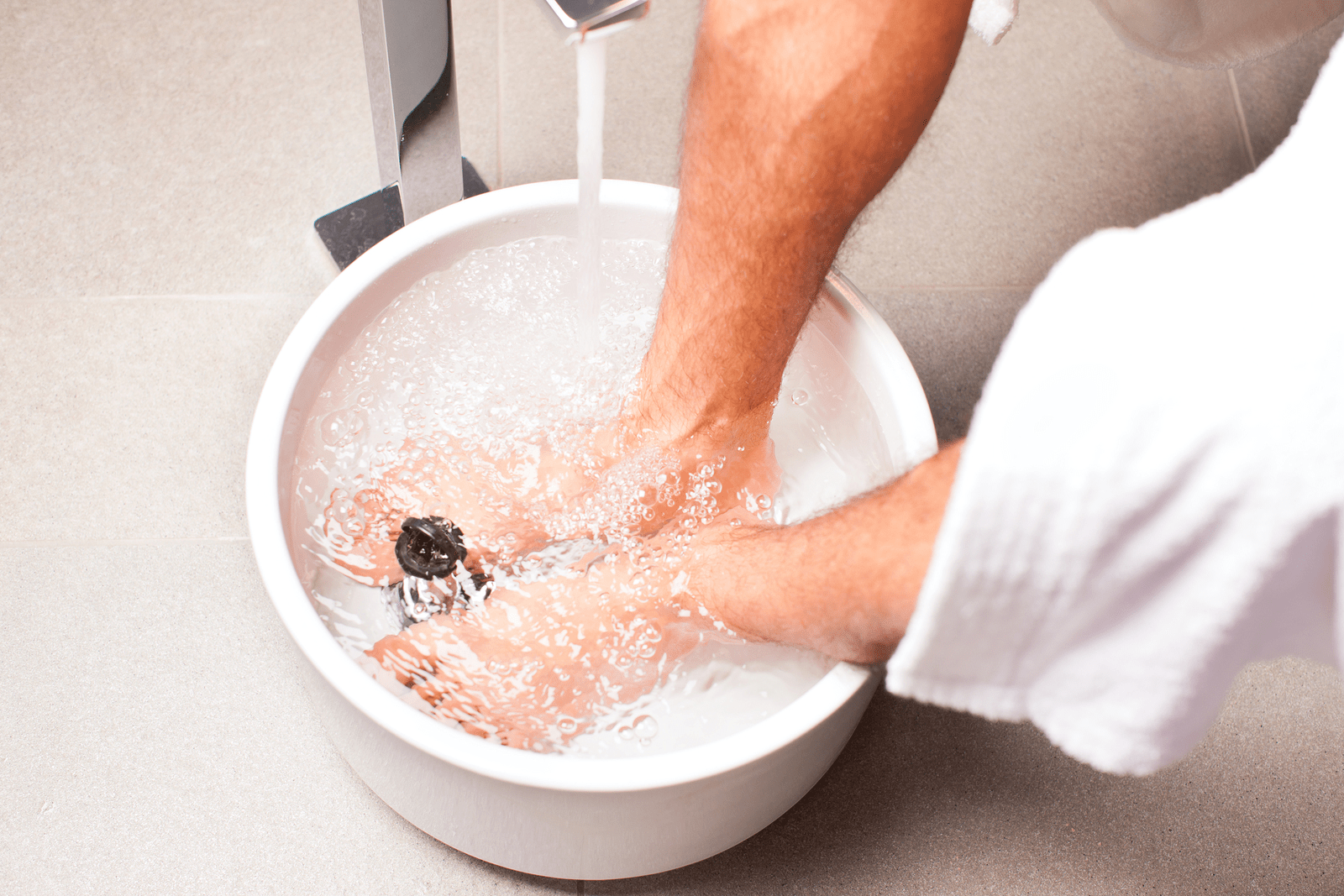
Warm Feet, Cold Feet: Health Benefits of Contrast Hydrotherapy
A contrast hydrotherapy foot bath is an excellent way to strengthen your immune system, relieve congestion, soothe sore muscles, and improve circulation. It's great to do in the winter time as it can help promote healthy sleep and warm up cold feet. It's also beneficial for individuals with diabetes as they are prone to a foot problem known as peripheral neuropathy. This condition causes unrelenting burning, stabbing pains, numbness and aching in one or both feet.
Contrast hydrotherapy involves alternating applications of cold and warm compresses. It can also be foot immersion in cold and warm water for a specified amount of time. You're probably familiar with using it for muscle injuries such as a sprain. For individuals with diabetes, it can reduce swelling and pain as well as improve blood circulation.
Importantly, if you have inflammation or open wounds on the legs or feet, varicose veins, thrombosis or phlebitis, consult with your health practitioner before using a foot bath. If you have any discoloration in your feet or toes, you should also talk to your doctor first. These signs can indicate more serious circulation problems that should be evaluated.
Looking for more at-home health ideas? Consider attending a class (in-person or online). Or you can schedule a 15 min Discovery Visit with Dr. Blandford to learn more about your natural health options.
Indulge in a Contrast Foot Bath
Here are the recommendations for trying a contrast foot bath at home.
1) Purchase two basins and keep them for your foot baths, each one large enough for both feet and sufficient water to cover them.
2) Gather up a pair of cozy socks and a supply of towels (water will splash when you move from one basin to another).
3) Fill one basin with cold water, and another with warm water*. Test water with your hand or a spa thermometer (between 85-96 degrees F) to make sure it's not too hot.
4) Start with putting your feet in the warm water, for 3-5 minutes.
5) Immediately switch to the cold water for 30-60 seconds at the most.
6) Repeat the process 3-5 times. Always end with the cold water.
7) Gently pat dry legs and feet and put on warm socks.
8) Rest for 20 minutes
*Adding epsom salts to the warm water may help increase circulation and ease pain or discomfort. Alternatively, adding a lavender/chamomile tea bag to the warm water adds aromatherapy to your foot soaks.
Sources:
- HumanKinetics.com. "How to use heat and cold to treat athletic injuries." Accessed on 5 Sep 2016: http://www.humankinetics.com/excerpts/excerpts/how-to-use-heat-and-cold-to-treat-athletic-injurie
- Jacques, Erica. (2021). “Controlling Neuropathic Pain.” Diabetes Self Management. http://www.diabetesselfmanagement.com/managing-diabetes/complications-prevention/controlling-neuropathic-pain/
- Pizzorno, Joseph E. (2013). “Textbook of Natural Medicine.” St. Louis, MO Elsevier. (chapter 40), pp 335.
- Mooventhan, A, and Nivethitha,L. (2014)."Scientific Evidence-Based Effects of Hydrotherapy on Various Systems of the Body." North American Journal of Medical Sciences 6.5: 199-209. https://pmc.ncbi.nlm.nih.gov/articles/PMC4049052/.
- Petrofsky, J., Lohman III, E., et al. (2007). "Effects of contrast baths on skin blood flow on the dorsal and plantar foot in people with type 2 diabetes and age-matched controls." Physiotherapy Theory & Practice 23:4. http://www.ncbi.nlm.nih.gov/pubmed/17687732.
Leave a Comment
(0 Comments)