
Keeping It Regular with Fiber
Disclaimer: This page contains some affiliate links. I may earn a small commission when you click any link here to which goes back into Hazelnut Naturopathic Health. You are not charged any extra money if you decide to make a purchase, and you help fund a local business focused on improving the health and well-being of the communities of West Michigan. These are products which I recommend to clients who ask, and all of the affiliate links here belong to companies/products which I have tried and personally love.
It's a good, healthy practice to have at least one bowel movement a day, but anywhere from one to three daily is considered normal. Toxins and liver byproducts such as bile, bilirubin (from red cell breakdown), and hormone metabolites are excreted. All fiber is important to a healthy bowel, increasing meal satiety and decreasing bowel transit time. Adding fiber encourages bowel regularity. The recommended daily amount of fiber is 25 grams for women and 38 grams for men. In the United States, it's estimated that people only eat an average of 15 grams of fiber daily.
What is Fiber?
Fiber is carbohydrates (carbs) from the cell walls of plants that aren't well digested by humans. There are two main types of fiber: soluble and insoluble. These are classified based on their ability to dissolve in water.
Soluble fiber is fermentable, forming substances in the intestine, and slows down digestion so nutrients are more completely absorbed. Gut bacteria break soluble fiber into short-chain fatty acids (SCFAs) that shorten stool transit time, are important for feeding intestinal cells, and maintaining a healthy gut microbiome.
Insoluble fiber doesn't ferment as much as soluble fiber, but it adds bulk to stools. When added to the diet, these fibers can have a laxative effect and are often recommended to relieve constipation.
How to Choose a Fiber Supplement
There are four main characteristics that help separate different types of fibers. These characteristics are solubility, fermentation speed, viscosity (how thick it is in water), and if the fiber forms a gel when exposed to water. A mix of all of these qualities is critical to finding a good supplement. Clinically, a fiber that is soluble but not fermenting with the ability to form a gel is shown to be best.
Which Supplement Fits the Bill?
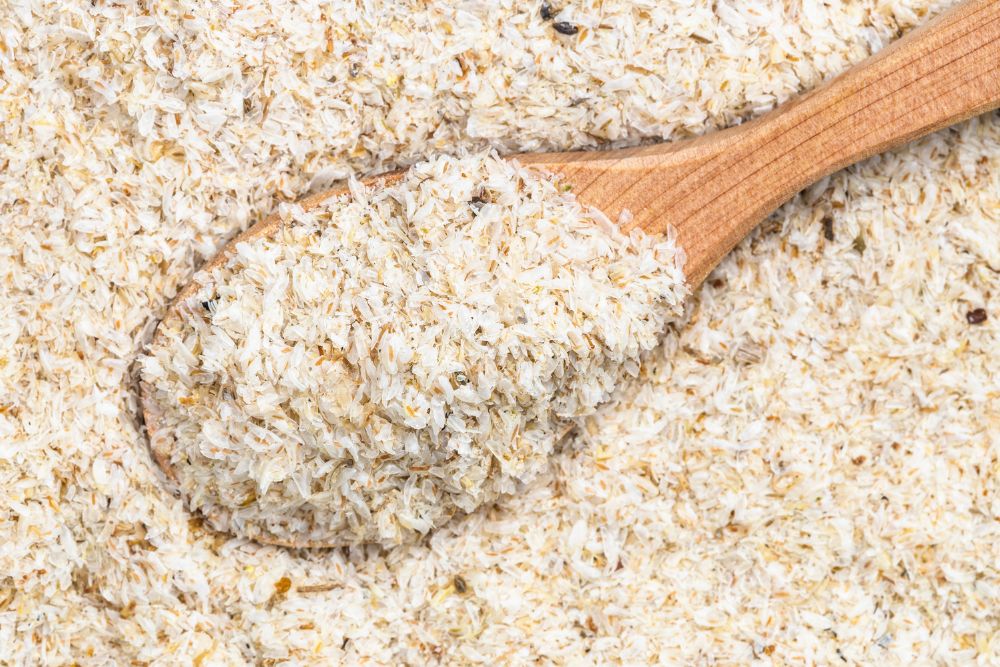
- Psyllium husk is a great, balanced option (containing soluble and insoluble fiber) as it is widely available. Research shows it can help with cholesterol and blood sugar levels.
- Flaxseed is also a great option as it contains soluble and insoluble fiber. This is best purchased as a whole seed and stored in the refrigerator for optimal freshness. Use a clean coffee grinder or a mortar and pestle to grind the seeds as needed.
- Chia seeds can be added due to their soothing effects on the gut.
- Brown rice or wheat bran may be more helpful if constipation is a concern.
There are other over-the-counter name brand fiber options that may be a good fit for you. Be sure to read through the ingredients to make sure these products are as natural as possible with only a few ingredients. If you've never had a fiber supplement before, start slow. Adding fiber to your diet too quickly can cause a cramping pain for some people, especially if you are constipated. Do not add fiber to your diet without discussing this with a qualified health professional.
Resources:
- Barber TM, Kabisch S, Pfeiffer AFH, Weickert MO. 2020. "The Health Benefits of Dietary Fibre." Nutrients; 12(10): 3209. doi: 10.3390/nu12103209. PMID: 33096647; PMCID: PMC7589116.
- Ioniță-Mîndrican CB, et al. 2022. "Therapeutic Benefits and Dietary Restrictions of Fiber Intake: A State of the Art Review." Nutrients; 14(13): 2641. doi: 10.3390/nu14132641.
- McRorie JW Jr. 2015. "Evidence-Based Approach to Fiber Supplements and Clinically Meaningful Health Benefits, Part 1: What to Look for and How to Recommend an Effective Fiber Therapy." Nutr. Today; 50(2): 82-89. doi: 10.1097/NT.0000000000000082. PMID: 25972618; PMCID: PMC4415962.
- McRorie JW Jr. 2015. "Evidence-Based Approach to Fiber Supplements and Clinically Meaningful Health Benefits, Part 2: What to Look for and How to Recommend an Effective Fiber Therapy." Nutr Today; 50(2): 90-97. doi: 10.1097/NT.0000000000000089. PMID: 25972619; PMCID: PMC4415970.
Leave a Comment
(0 Comments)